
5 Ways You Are Making Your Bunion Worse
(And How to Finally Fix It)
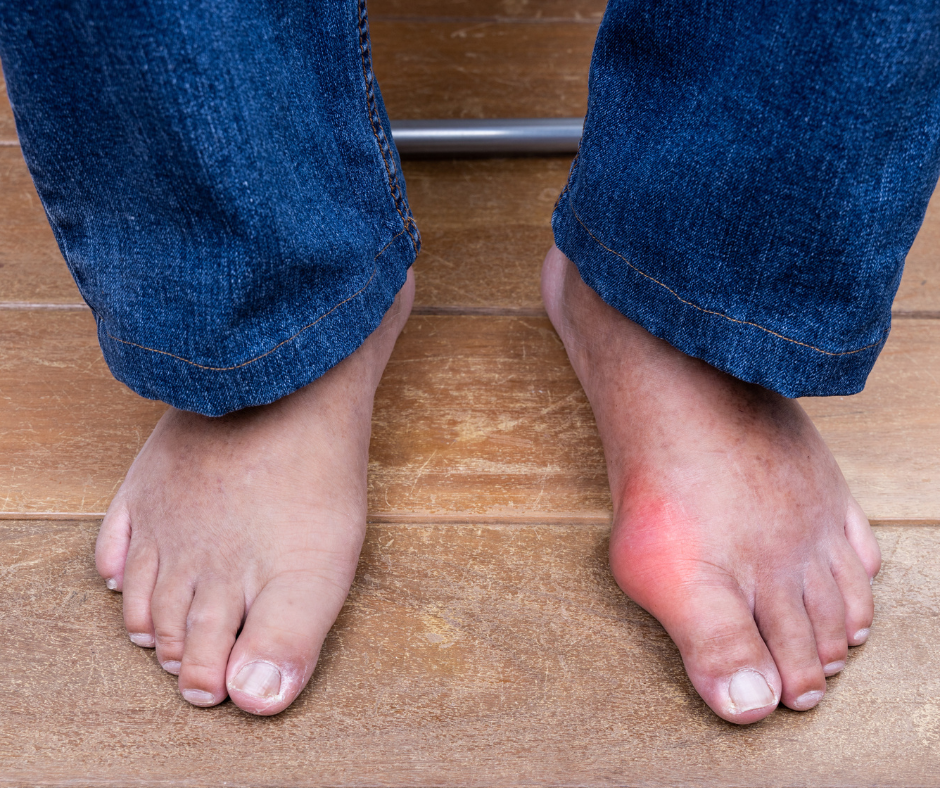
A Bunion (Hallux Valgus) is not a callus or a random growth of bone. It is a progressive dislocation of your joint: the long bone of your foot is drifting outward, while your big toe is pointing inward. It will not heal or reverse itself on its own. In fact, many of the things you do every day can accelerate deformity.
The Reconstructive Foot & Ankle Institute helps patients navigate this frustration, so we want to spread the word on what works…and what doesn’t! If you’re trying to manage your bunion pain, read on for the top 5 ways you might make it worse.
1. The “Toe Box” Trap
The most common way people aggravate a bunion is by wearing the wrong shoes.
Pointy-toed dress shoes and high heels do not cause bunions (genetics do that), but they rapidly accelerate them.
- The Damage: A narrow toe box physically crushes your big toe into your second toe, forcing the unstable joint outward and inflaming the surrounding tissue.
- The Coping Strategy: Switch to footwear with a wide, square, or rounded toe box. If you cannot comfortably wiggle all your toes, the shoe is too tight.
2. Ignoring Your Flat Feet
Bunions are a biomechanical problem. If you have flat feet (overpronation), your arch collapses every time you take a step.
- The Damage: This collapse forces you to push off the side of your big toe rather than the bottom of it, placing immense, unnatural torque on the joint.
- The Coping Strategy: We prescribe Custom Orthotics to act as a structural scaffold for your arch. By correcting your mechanics from the ground up, we stop the excessive pressure that fuels the bunion’s growth.
3. Relying on “Miracle” Splints for a Cure
The internet is full of silicone toe spacers and overnight bunion splints that promise to “straighten” your toe.
- The Damage: While splints provide a nice, temporary stretch for tight ligaments, they cannot push a dislocated bone back into place permanently. Relying on them as a “cure” delays real medical treatment while the joint continues to deteriorate.
- The Coping Strategy: Use spacers for temporary pain relief at the end of the day, but understand they are a management tool, not a fix.
4. Shaving the Callus
Many patients develop a thick, painful callus directly over the bunion bump.
- The Damage: Taking a file or medicated corn-remover pad to this skin only treats the symptom. The hard skin is your body’s attempt to protect the protruding bone from friction. Removing it leaves the joint raw, unprotected, and prone to infection.
- The Coping Strategy: Use non-medicated, gel bunion pads to cushion the area against your shoe.
5. Waiting Until Your Second Toe Curls
Your foot is a tightly packed Kinetic Chain. When the big toe drifts, it needs somewhere to go, and it usually goes right under (or over) your second toe.
- The Damage: Waiting too long to treat a bunion almost always leads to a Hammertoe. The second toe is forced upward into a rigid, claw-like position that rubs against the top of your shoes.
The Solution: One-Stitch Bunion Surgery
If your bunion is dictating your lifestyle, it is time to move past coping strategies.
You do not have to fear the months-long, painful recoveries associated with traditional bunion procedures. Dr. Michaels specializes in a highly advanced alternative:
This minimally invasive technique is a massive leap forward in podiatric surgery.
- Less Trauma: Instead of a long incision, the procedure requires an incision so small it can be closed with a single stitch.
- Faster Recovery: Because there is significantly less tissue damage, patients experience drastically reduced post-operative pain and swelling.
- Get Moving: You spend less time in a surgical boot and more time getting back to the activities you love.
Don’t let a bump control your life. If conservative management fails, contact us.
Like Dr. Michaels always says:
If it’s below the knee, think of me!
For any foot-related problems you’re facing, the Reconstructive Foot & Ankle Institute offers comprehensive podiatric services. Call us at 301-797-8554 or contact us to schedule an appointment. Located in Hagerstown & Frederick, MD, we’re ready to meet any of your foot health needs.
