
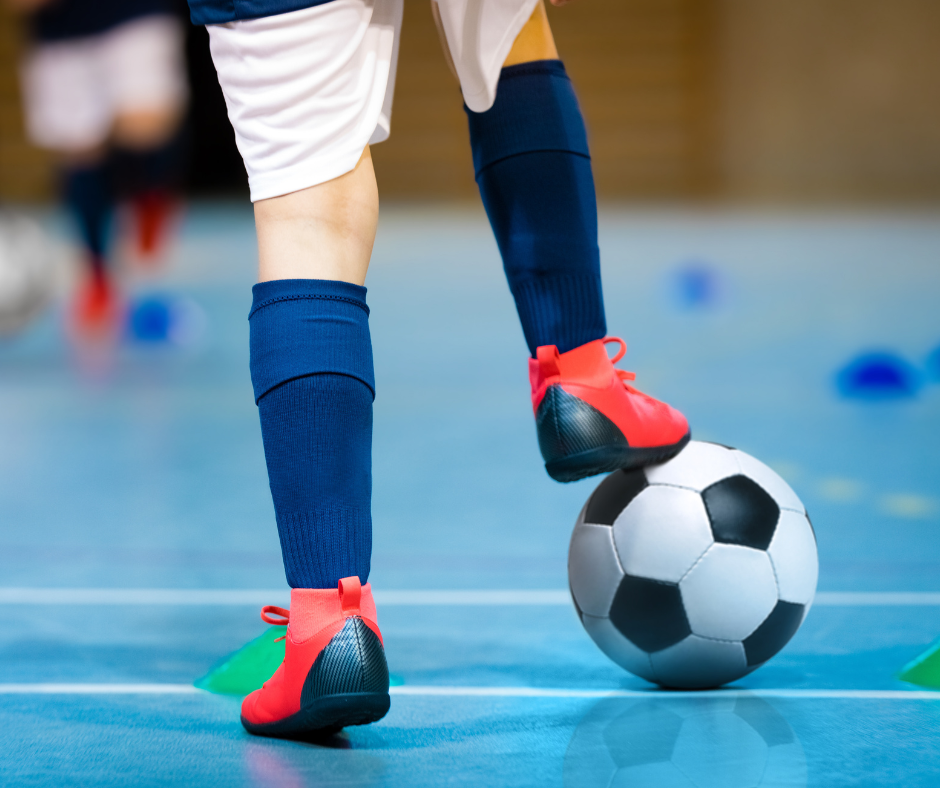
The “Year-Round” Athlete
Why Your Child’s Heel Pain Isn’t Just Growing Pains
The days of playing soccer in the fall, basketball in the winter, and taking spring off are largely gone. Today, children as young as seven are joining travel teams, attending specialized athletic camps, and playing a single sport “year-round.”
While this builds athletic skill, it also places unprecedented stress on developing bodies. At the Reconstructive Foot & Ankle Institute, we are seeing a massive spike in pediatric overuse injuries. If your young athlete is limping off the field, it is time to stop dismissing it as “just growing pains.” Keep reading to learn what you can do to get ahead of the problem.
The “Growing Pains” Trap (Sever’s Disease)
The most common mistake parents and coaches make is assuming that foot or heel pain is a natural part of a growth spurt.
If your 9-to-14-year-old complains of pain in the back of their heel after running, they likely have Sever’s Disease (Calcaneal Apophysitis).
- The Anatomy: Children have a growth plate at the back of the heel bone. During a growth spurt, the bone often grows faster than the Achilles tendon, pulling the tendon tight like a guitar string.
- The Injury: When your child runs or wears flat, unsupportive soccer cleats, the tight Achilles yanks violently on the open growth plate, causing severe inflammation.
- The Cost: It is not a “phase” to push through. Pushing through Sever’s disease alters a child’s gait, transferring stress to their knees and lower back.
The Danger of the “Flat” Foundation
Another hidden threat to the young athlete is Pediatric Flatfoot. Many toddlers have flat feet, but if your child is 7 or older and their ankles still roll aggressively inward (overpronation) when they stand, their foundation is unstable.
When you take an unstable, flat foot and subject it to the high-impact, repetitive stress of year-round basketball or lacrosse, you are laying the groundwork for chronic adult issues.
- The Domino Effect: Uncorrected flat feet in active children lead directly to chronic ankle instability, severe shin splints, and early-onset bunions in their teenage years.
The Prevention Playbook
Our goal isn’t to bench your child; it is to equip them with the biomechanical support they need.
- Custom Pediatric Orthotics (The “Guide Rails”)
- Store-bought gel pads don’t work for growing athletes; they just add squishy weight. We design Custom Orthotics from precise scans of your child’s feet.
- These devices act like guide rails, holding the heel straight and supporting the arch while the bones develop. This prevents a collapse that causes tendon strain.
- The Cleat Check
- Soccer and baseball cleats are notorious for having zero arch support and a rigid, zero-drop heel. We help parents select the right footwear and show you how to integrate custom support into narrow athletic shoes.
Invest in Their Future Mobility
If your child is complaining of tired legs, heel pain, or ankle stiffness, let us evaluate their biomechanics. Like Dr. Michaels always says:
If It’s Below the Knee, Think of Me!
For any foot-related problems you’re facing, the Reconstructive Foot & Ankle Institute offers comprehensive podiatric services. Call us at 301-797-8554 or contact us to schedule an appointment. Located in Hagerstown & Frederick, MD, we’re ready to meet any of your foot health needs.
