
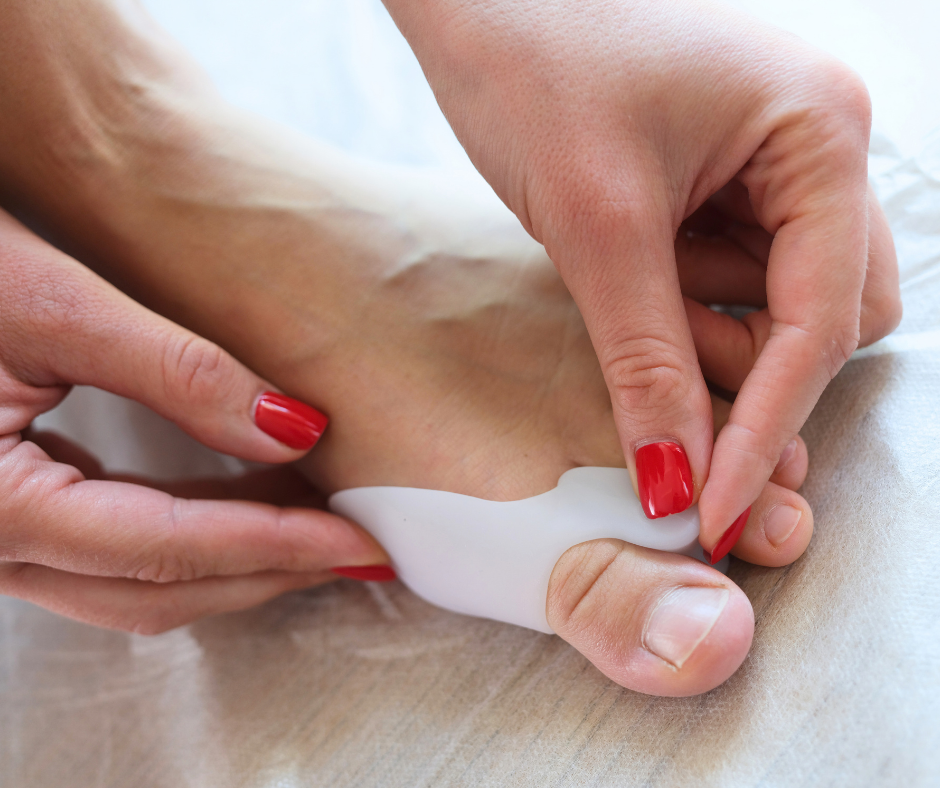
The Truth About Toe Spacers: Can Silicone Really Reverse a Bunion?
The wellness industry has recently discovered “toe spacers.” Once relegated to nail salon pedicures, silicone toe separators are now being aggressively marketed across social media as a yoga-style biohack. The core claim? Wearing these flexible rings while you walk or sleep will “realign” your toes and cure bunions and hammertoes without surgery.
But before you spend your money on these trendy devices, we need to separate the biomechanical facts from internet fiction. The Reconstructive Foot & Ankle Institute elaborates below.
The Big Bunion Misconception
To understand why silicone alone cannot cure a structural deformity, we must look at the actual causes of bunions.
- One of the most common misconceptions about bunions is that they are simply a growth of bone on the side of the foot.
- A bunion is a complex 3D joint dislocation.
- The bones in the middle of your foot have shifted out of alignment, forcing the big toe to lean inward.
A flexible piece of silicone placed between your toes might stretch the skin and provide a temporary feeling of relief. Still, it does not have the mechanical force required to push a dislocated metatarsal bone back into place.
- Relying solely on spacers and ignoring proper footwear is one of the top ways to make your bunion worse!
When Do Spacers Actually Help?
Are these devices entirely useless? Not exactly. While they will not reverse skeletal deformity, there are times when a podiatrist recommends toe spacers for symptom management.
- If your bunion is forcing your big toe to rub against your second toe, a silicone separator can reduce skin friction and prevent painful corns or blisters.
Conservative Care for Hammertoes
This conservative approach is also used for hammertoes.
- In a helpful discussion on hammertoe treatments, Dr. Michaels explains that curled toes are often caused by tendon imbalances or a bone that’s too long.
- Before turning to surgery, conservative options are the first line of defense.
Wearing shoes with a thicker, wider toe box combined with a “gel toe crest pad” (a silicone ring with a supporting pad that goes underneath the lesser toes) can accommodate the deformity and stop your toes from painfully rubbing against the top of your shoe.
Real Solutions for Structural Foot Problems in Maryland
If you want to know how to truly prevent bunions and hammertoes from progressing, the answer lies in supportive footwear and custom orthotics that address your foot’s mechanics, not just spreading the toes.
- However, if conservative accommodations no longer relieve your pain and keep you from enjoying life around the Maryland and Tri-State area, it is time to look at structural correction.
- The good news is that modern podiatric surgery has evolved far beyond the painful, months-long recoveries of the past!
- Today, specialized one-stitch solutions for bunions and hammertoes allow patients to fix the deformity in a fast, outpatient setting.
In fact, Dr. Michaels notes that some hammertoe corrections can be done right in the exam chair with a single stitch.
- For bunion corrections, understanding the recovery timelines of a one-stitch repair versus traditional surgery reveals just how much faster and less invasive these modern procedures have become.
Bottom line? Instead of hoping a trendy piece of silicone will magically remodel your skeleton, seek a definitive clinical evaluation. It will give you answers and lead to results that last!
Like Dr. Michaels says:
If It’s Below the Knee, Think of Me!
Reconstructive Foot & Ankle Institute, LLC offers comprehensive podiatric services. Call us at 301-797-8554 or contact us to schedule an appointment. Located in Hagerstown & Frederick, MD, we’re ready to meet any of your foot health needs.
