
Why Do My Heels Hurt After Wearing Flip-Flops?
How Unsupportive Summer Footwear Triggers Acute Plantar Fasciitis
As the summer temperatures rise, it’s tempting to kick off your restrictive sneakers and slide into a cheap, breezy pair of flip-flops. However, after a long weekend of walking around, you might find yourself waking up with a sharp pain shooting through your heel.
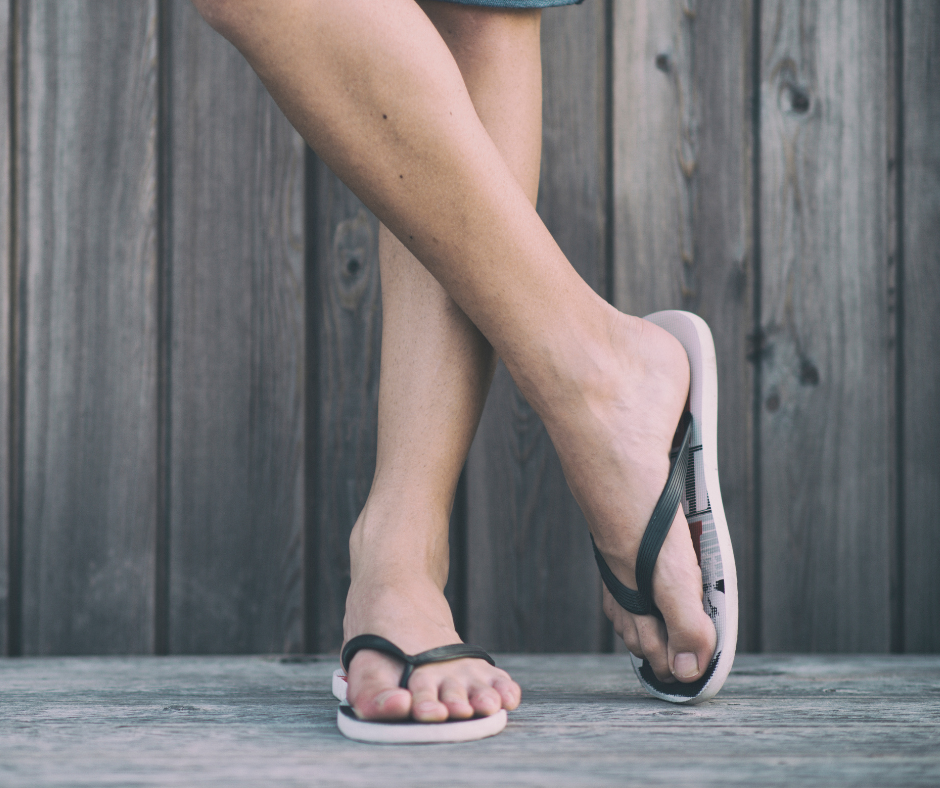
Flip-flops cause heel pain because they lack arch support and force your toes to constantly grip the sandal, altering your natural gait. This overworks the plantar fascia, forcing it to absorb your full body weight. The result? Rapid strain that creates micro-tears, intense inflammation, and sharp plantar fasciitis pain.
But don’t worry! In this blog, the Reconstructive Foot & Ankle Institute explains exactly what is happening to your feet, then covers how you can find relief.
The Mechanical Flaws of the Standard Flip-Flop
The human foot is an incredibly complex shock-absorbing machine, but it was not designed to walk on flat, hard, man-made surfaces like concrete or hardwood without support. Standard rubber flip-flops actively work against your foot’s natural biomechanics in three specific ways:
- Zero Arch Support: Without a structured arch pushing up against your foot, your arch physically collapses toward the ground with every single step. This puts immense, repetitive tension on the plantar fascia ligament.
- The “Toe-Grip” Effect: Because there is no heel strap to secure the shoe to your foot, your toes have to instinctively curl and grip the base of the sandal to keep it from flying off. This constant clenching shortens your stride, alters your normal gait, and heavily strains the tendons traveling from your toes to your heel.
- No Shock Absorption: A thin piece of foam offers zero protection for your heel bone (the calcaneus). Every time your heel strikes the pavement, the raw impact force travels directly up into your foot and ankle.
Understanding the “First Step” Morning Pain
When you overwork your feet in unsupportive sandals all day, the plantar fascia develops microscopic tears and becomes highly inflamed.
This is the classic onset of Plantar Fasciitis.
- The hallmark symptom of plantar fasciitis is the dreaded “first step” morning pain. While you sleep, the inflamed plantar fascia ligament rests and tightens up.
- When you get out of bed and put your full body weight on your foot for the first time, that tightened, inflamed ligament rapidly tears back open, causing a sharp pain that feels like stepping on a sharp object.
3 Ways to Get Immediate Relief at Home
If a weekend in flip-flops has triggered a plantar fasciitis flare-up, you need to intervene immediately to stop the cycle of inflammation.
1. The Frozen Water Bottle Roll
To rapidly reduce localized swelling, freeze a standard plastic water bottle.
- Sit in a chair, place the frozen bottle under your arch, and slowly roll your foot back and forth over it for 10 to 15 minutes.
- This provides an active deep-tissue massage while delivering targeted ice therapy directly to the inflamed ligament.
2. Deep Calf Stretches
Your plantar fascia is physically connected to your Achilles tendon and your calf muscles.
- When your calves are tight, they pull directly on your heel, worsening the tension on the bottom of your foot.
- Stand facing a wall, place your hands on it, and extend your painful foot behind you, keeping the heel flat on the floor.
- Lean forward until you feel a deep stretch in your calf, holding it for 30 seconds to release the mechanical tension.
3. The “Shoe Reset”
The absolute fastest way to stop flip-flop pain is to stop wearing the flip-flops.
- Immediately switch back to a highly supportive, lace-up athletic sneaker with a firm heel counter and a rigid sole.
- You must give your arches structural support while the inflammation subsides.
When to Seek Professional Podiatric Care
While minor flare-ups can often be managed at home by simply changing your footwear, you should not ignore heel pain that lasts longer than a week. If left untreated, acute plantar fasciitis can rapidly become a chronic condition that leads to the formation of painful heel spurs.
Reconstructive Foot & Ankle Institute, LLC offers comprehensive podiatric services. Call us at 301-797-8554 or contact us to schedule an appointment. Located in Hagerstown & Frederick, MD, we’re ready to meet any of your foot health needs.
